



Picky Eater, Meet Your Match: How I Used Nurture Life to Expand My 4-Year-Old’s Menu

Claire Montgomery
March 13, 2026

Our mission is to highlight top-tier products you’ll love. While we may receive a commission on your purchases, our picks are chosen independently by our editors based solely on quality and performance.
If you have a four-year-old, you probably already know that they have opinions. Strong ones. About everything — but especially about food. My son Andrew entered the “beige phase” somewhere around his fourth birthday, and it hit like a switch. One day he was happily eating roasted sweet potatoes; the next, anything that wasn’t the color of bread or cheese was treated like a personal insult.
I’m not the kind of parent who panics about this stuff. I know picky eating is developmentally normal, and I’ve read enough to understand that most kids grow out of it. But knowing that intellectually and watching your child survive on what feels like a rotation of three foods are two very different things. My concern was never about control — it was about nutrition. Was he actually getting what his body needed?
That’s when I decided to use Nurture Life’s Kids Meals not just as a convenience play (which, let’s be honest, it absolutely is) — but as a deliberate strategy to widen Andrew’s menu. Here’s what happened.


Starting Where He Already Was
The single best piece of advice I got — not from a parenting book, but from a friend who’s a pediatric occupational therapist — was to stop trying to leap from chicken nuggets to quinoa bowls. You meet the kid where they are and build from there.
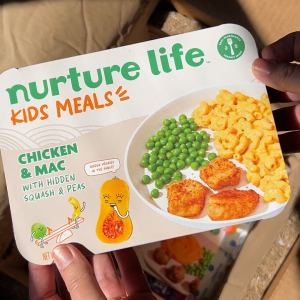
Nurture Life made this surprisingly easy because their menu includes a set of Picky Eater Favorites that are specifically designed for kids who are not exactly culinary adventurers. I started Andrew’s first week with their Mac & Cheese with Hidden Butternut Squash, Swedish Meatballs with Egg Noodles & Broccoli, and the Alfredo Bow Ties with Turkey Meatballs & Broccoli. These are foods that look and taste familiar to a picky eater — pasta, cheese, meatballs — but they’re dietitian-designed and packed with hidden veggies, protein, and nutritious ingredients Andrew would usually never willingly choose on his own. Andrew would never willingly choose on his own.
The mac and cheese was the gateway. He ate it without a single complaint, completely unaware that there was butternut squash blended into the sauce. I’m not going to pretend I didn’t feel a small, private thrill about that.
The Slow Build
Here’s where I think a lot of parents — myself included, in the past — go wrong with picky eating. We get impatient. The kid accepts one new thing and we immediately try to introduce five more, and then we’re back to square one with a plate of untouched food and a child who now trusts us even less at the dinner table.
Research suggests it can take anywhere from 9 to 15 exposures before a child accepts a new food. Not “loves” it. Just accepts it. That’s a lot of repeated attempts, and if you’re the one cooking and watching your effort get rejected over and over, it’s demoralizing. With Nurture Life, I didn’t have that emotional investment. It took me sixty seconds to heat the meal, so when Andrew pushed the Penne Bolognese with Carrots away on the first try, I didn’t feel the usual frustration. I just noted it, moved on, and tried again the following week.
By the third exposure, he was eating around the carrots. By the fifth, he was eating the carrots. It was unglamorous, undramatic progress — which is exactly how real food acceptance works.

Branching Out (Gradually)
After about three weeks on the Picky Eater Favorites, I started swapping one meal per week for something slightly outside Andrews comfort zone. The Mexican Chicken Mole with Fiesta Rice was my first gamble — it has mild spice (they’re careful to note it’s “spiced but not spicy”), and the rice-and-chicken combination was familiar enough that the new flavors weren’t overwhelming.
He didn’t love it the first time. He picked at the rice and ate the chicken. But I kept it in the rotation, and by week three it was a regular. The Beef Meatballs with Sweet Mashies & Peas followed a similar arc — initial skepticism, gradual warming, eventual acceptance.
The thing I appreciate about the Nurture Life menu is that it gives me a structured way to introduce variety without having to plan it all myself. Every month they rotate in new options, which means Andrew is exposed to different flavors and textures on a schedule that I don’t have to manage. I just pick the meals, and the built-in variety does the rest.
What I Didn’t Do (And Why It Matters)
I want to be clear about something: I never tricked Andrew into eating these meals. The Nurture Life approach — and the one their registered dietitians advocate — isn’t about deception. Yes, there are vegetables blended into sauces, but the goal isn’t a “gotcha.” It’s gradual, pressure-free exposure.
I didn’t make a big deal when he tried something new. I didn’t praise him excessively for eating a vegetable (apparently, that can backfire by making food feel like a performance). I just put the meal in front of him, ate my own dinner, and let him make his own choices. Some nights he ate everything. Some nights he ate the pasta and left the broccoli in a neat pile on the side of the tray. Both were fine.
The low stakes are the whole point. When you’re not standing over a stove for an hour, you’re not emotionally attached to the outcome. That shift in energy — from “please just eat it” to “it’s there if you want it” — made a noticeable difference in how Andrew approached the table.
The Numbers (Because I’m That Parent)
After two months of this approach, here’s roughly where we landed:
Andrew went from reliably eating about 4–5 different meals to comfortably rotating through 10–12. That doesn’t sound dramatic, and it isn’t. But tripling a picky eater’s accepted menu in eight weeks, without a single mealtime meltdown (for him or me), felt like a legitimate win.
He still avoids most green foods if he can visibly see them (we’re working on it). But he now eats meals with vegetables cooked into sauces, accepts meatballs made with ingredients he wouldn’t eat on their own, and — the big one — no longer automatically rejects something just because it looks unfamiliar. That’s the behavioral shift that matters more than any single food.
At $7.69 per Kids Meal, it’s not the cheapest option compared to cooking from scratch. But when I factor in the food waste from home-cooked meals he refused to eat, the grocery runs for ingredients I used once, and the time I spent cooking things that ended up in the trash — the math gets a lot closer than you’d think.
The Verdict
If you’re dealing with a picky eater and you’re exhausted by the advice to “just keep offering new foods!” — I get it. That advice is technically correct and practically useless without a system to back it up. Nurture Life gave me that system: a rotating menu of dietitian-designed meals that let me start with what Andrew already liked and slowly, patiently expand from there.
It’s not a miracle fix. Your kid is still going to have nights where they decide the color orange is unacceptable. But having a low-effort, nutritionally sound starting point made the whole process less stressful for both of us — and that, honestly, is what made the difference.
Want to try the picky eater approach? You can explore the full Nurture Life Kids Meals menu here.

About the Author
Claire is a seasoned lifestyle writer and digital strategist who has spent over a decade navigating the intersection of wellness and high-performance careers.
Check Other Reviews

The “Edge” I Lost at 40—And How I Got It Back (P.S. It’s Testosterone)

Why Your “Creatine-Only” Routine is Leaving Gains on the Table

From Purées to Real Food: My Transition with Nurture Life

The Polarizing Perfection of Little Saints’s St Ember: Why It’s Not for Everyone (And Why I Love It)

0 Comments